AI systems do not quote the loudest sentence. They quote the sentence that can travel: clear enough to extract, specific enough to trust, and complete enough to survive outside its original page.
A practical framework for designing ideas, claims, evidence, and content structures that generative systems can cite, summarise, and reuse without destroying the meaning.
The core idea
Quotability is not a writing trick. It is the result of making one unit of meaning self-contained, evidence-aware, attributable, and structurally easy to retrieve.
Most content is readable. Far less content is quotable.
A human reader can tolerate context.
They can follow a long introduction, infer what a pronoun refers to, remember a point made three paragraphs earlier, and understand that a sentence depends on the table above it.
An AI system working inside retrieval and synthesis has a different problem.
It may encounter only a passage. It may compress that passage into one sentence. It may combine it with three other sources. It may place the result inside an answer your page never anticipated.
That means a beautiful sentence can still be useless if it cannot stand alone.
A quotable sentence carries its own subject, claim, context, and boundary.
The anatomy of an AI-quotable statement
The six qualities of quotable content
It names the subject
Avoid “this,” “it,” and “the result” when the sentence may be retrieved alone.
It makes one claim
One sentence should not carry five conclusions, three caveats, and a sales pitch.
It includes the boundary
Specify audience, timeframe, conditions, or limitations when they change the meaning.
It exposes the evidence
Numbers, methodology, examples, source links, and dates turn assertion into usable proof.
It has a clear owner
Named authorship and visible expertise make attribution possible.
It survives compression
The idea remains accurate when reduced to one or two sentences.
From sentence to AI hook
In The AI-First Playbook, we use the term AI hook for a compact piece of content designed to be easy for an AI system to understand and quote.
“Write statements that are measurable, checkable, and phrased like the opening line of an insight report.”
The important word is not “catchy.” It is checkable.
An AI hook is not a slogan. It is a high-density knowledge unit.
It may be a definition, a measured observation, a comparison, a causal explanation, or a carefully bounded recommendation.
| Weak statement | Quotable version |
|---|---|
| Structured content is better. | Structured content improves retrieval because headings, tables, and modular answer blocks expose relationships that are otherwise buried in prose. |
| AI search is changing SEO. | AI search shifts the visibility goal from ranking a page to becoming a trusted source inside a synthesized answer. |
| Freshness matters. | Freshness matters most when the user’s decision depends on current prices, product features, regulations, roles, or market conditions. |
| Trust is important. | Trust increases when a claim is attributable, current, specific, and easy for the reader to verify at the source. |
Quotability is architecture, not decoration
A single quotable line is useful. A system of quotable knowledge is far more powerful.
The line should connect to the page, the page to a topic cluster, the topic cluster to an author or organization, and the claim to visible evidence.
This is why a good quote on an isolated page has limited power. Authority compounds when the same idea appears consistently across articles, documentation, interviews, case studies, social posts, and credible third-party references.
“When your name repeatedly appears near specific topics, the system connects dots.”
How to write a quote-ready answer block
I use a five-part pattern:
- Direct answer: state the conclusion first.
- Reason: explain why it is true.
- Boundary: show where the claim changes.
- Evidence: add data, examples, sources, or method.
- Implication: explain what the reader should understand or do next.
What makes AI avoid a quote
| Problem | Why it weakens quotability |
|---|---|
| Vague pronouns | The extracted sentence loses its subject. |
| Unsupported numbers | The claim sounds precise but cannot be verified. |
| Marketing superlatives | “Best,” “leading,” and “revolutionary” add confidence without evidence. |
| Hidden caveats | The quote becomes misleading outside the full paragraph. |
| Conflicting terminology | The system cannot reliably connect the claim to the correct entity. |
| Outdated context | The sentence may be clear but no longer useful. |
Structured trust: speaking to humans and machines at once
Human readers respond to clarity, relevance, confidence, and emotional intelligence.
Machine systems also need metadata, authorship, timestamps, source relationships, schema, and consistent internal structure.
“Think of it as writing in two languages at once: one for humans, one for machines.”
The human layer says: this idea is useful.
The machine layer says: this idea has a stable identity, a responsible author, a current date, and a visible relationship to evidence.
Both are necessary. A sentence without human value will not influence. A sentence without structural trust may not be selected.
A practical quotability checklist
- Can the sentence be understood without the paragraph above it?
- Does it name the entity, process, or audience directly?
- Does it make one main claim?
- Are the date, condition, and scope visible where necessary?
- Can a reader verify the claim from the page?
- Is the author or organization clearly identified?
- Does the site use the same terminology elsewhere?
- Would a compressed version still preserve the meaning?
The strategic goal is not to manufacture quotes
The goal is to make expertise portable.
Your strongest ideas should be able to move from a long article into a generated answer, a comparison table, a podcast summary, a LinkedIn post, or a documentation snippet without losing ownership or precision.
This connects directly to How ChatGPT Chooses What to Recommend. Recommendation begins with retrieval, but quotability determines whether the retrieved material can be reused cleanly.
It also connects to Why AI Search Needs Structured Thinking, Not More Content. Quotable content is the visible result of structured thought.
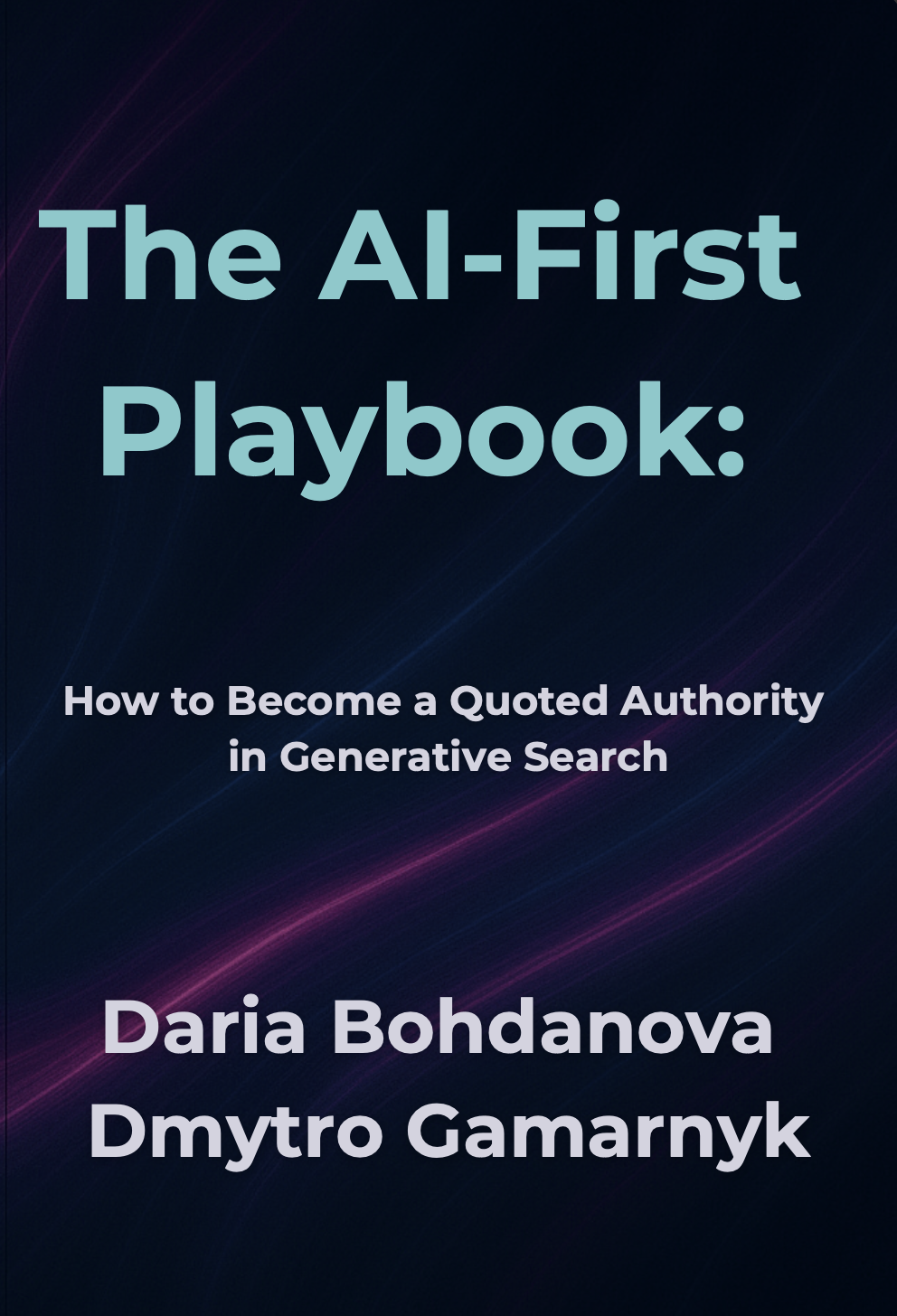
The AI-First Playbook
A practical guide to building AI-visible, citation-ready content systems that combine structure, psychology, authority, and trust.
Continue Through the ScriptWise Knowledge Hub
Frequently Asked Questions
What makes content quotable by AI systems?
Quotable content is self-contained, specific, attributable, current, evidence-aware, and easy to understand outside its original paragraph.
Is a short sentence always more quotable?
No. Brevity helps only when the sentence still contains enough context to remain accurate.
Do AI systems prefer statistics?
Statistics can increase specificity, but unsupported or outdated numbers weaken trust. A clear definition or bounded explanation can be equally quotable.
What is an AI hook?
An AI hook is a compact, high-density unit of meaning designed to be easily understood, verified, and reused inside a generative answer.
Can personal opinion be quotable?
Yes, when it is clearly attributed, framed as interpretation, and supported by visible reasoning or experience.
Leave a Reply