Category: AI Search & Content

Insights on AI visibility, generative search, semantic content, AI-ready information, answer engines, and trustworthy content strategy.

  • How ChatGPT Chooses What to Recommend

    AI Search & Content · Recommendation Systems

    ChatGPT does not recommend a brand because it published the most content. It recommends what best survives a chain of retrieval, semantic matching, source evaluation, synthesis, and trust calibration.

    A practical reverse-engineering model for understanding why some brands, products, and experts appear in generative answers while others remain invisible.

    By Daria BohdanovaAI Search · Knowledge Graphs · Product CommunicationScriptWise Premium Flagship ArticleApprox. 1,850 words

    The core idea

    Recommendation is not one decision. It is a sequence: understand the question, identify candidate information, evaluate semantic fit and source quality, resolve contradictions, and generate an answer that feels useful enough to trust.

    Important distinction: this is not a claim to reveal a proprietary ranking formula. It is a practical model built from publicly documented search and retrieval behavior, information architecture principles, and observable patterns in generative answers.

    What people imagine happens

    The popular explanation is simple: ChatGPT searches the web, finds the “best” page, and recommends it.

    That model is too crude.

    A generative answer may depend on the wording of the question, the current conversation, the availability of web search, the freshness of sources, the clarity of entities, the consistency of claims, and how easily several pieces of information can be synthesized into one answer.

    OpenAI describes ChatGPT search as a system that can search the web, cite sources, and provide timely answers. Deep research goes further by finding, analysing, and synthesising information across multiple sources. The practical implication is clear: visibility is no longer only about being indexed. It is about being useful inside a synthesis process.

    The page is not competing only to be clicked. It is competing to become evidence inside an answer.

    The recommendation funnel

    1. Query interpretation: the recommendation begins before search

    “Best CRM” is not one question.

    It may mean best for a solo consultant, best for enterprise procurement, best for healthcare compliance, best for automation, or best under a specific budget. The words are similar; the decision context is not.

    A recommendation system must infer the user’s underlying intent, constraints, risk tolerance, and desired outcome. That is why broad visibility does not guarantee selection.

    The more clearly your content defines who a product is for, when it is appropriate, what it replaces, and where it is not the best fit, the easier it becomes to match your information to a real decision.

    2. Retrieval: before ChatGPT can recommend you, it must find usable evidence

    Retrieval is the candidate-generation stage.

    Depending on the experience, ChatGPT may answer from model knowledge, use web search for current information, search connected sources, or synthesize a larger research set. OpenAI’s public documentation confirms that search-enabled answers can include inline citations and a sources panel, while deep research is designed to analyse multiple sources and produce cited reports.

    For a brand, this creates two different visibility problems:

    • Discovery failure: the relevant page is not found.
    • Extraction failure: the page is found, but the useful answer is too vague, buried, contradictory, or difficult to isolate.

    This is why direct answers, descriptive headings, comparison blocks, current facts, and stable terminology matter. They are not decorative SEO elements. They increase the number of usable evidence units a retrieval system can work with.

    3. Semantic relationships: keywords identify a topic; relationships explain it

    A keyword can tell a system that two pages mention the same thing. Semantic relationships show how the things are connected.

    Consider a dental implant page. A weak page repeats “dental implants.” A strong knowledge structure connects implants to candidacy, bone density, healing time, alternatives, cost, maintenance, contraindications, and expected longevity.

    The second page gives the model a usable map.

    Knowledge graphs make this principle explicit: information becomes more useful when entities and relationships are represented together. Even without building a formal graph database, a website can behave like a knowledge graph through consistent naming, internal links, comparison logic, category structure, and clear references between concepts.

    4. Entity clarity: can the system tell who you are?

    Generative systems must distinguish between similarly named companies, products, authors, locations, and services.

    Entity clarity is strengthened when the same identity is described consistently across the site and across credible external sources.

    IdentityStable naming

    Use one canonical brand, product, and author name.

    ContextClear category

    Explain what the entity is and which market or problem it belongs to.

    ConnectionConsistent relationships

    Link the entity to products, authors, evidence, locations, and recognised concepts.

    A site that alternates between three names for the same service creates avoidable ambiguity. A profile that claims expertise without connecting it to published work, clients, frameworks, or verifiable experience gives the system fewer relationships to evaluate.

    5. Authority: recommendation requires more than relevance

    A page can be perfectly relevant and still be a weak recommendation source.

    Authority is not one metric. It is a pattern of corroboration.

    Authority signalWhat it communicates
    Named authorshipA real person or organisation accepts responsibility for the claim
    Original frameworks or researchThe source contributes knowledge rather than only repeating it
    External referencesOther credible sources recognise or support the entity
    Specific evidenceClaims are connected to examples, data, methods, dates, or documented experience
    Topical consistencyThe source demonstrates depth across a coherent subject area

    Authority is not created by writing “industry-leading.” It is created when the information ecosystem around the claim makes that description plausible.

    6. Freshness: current questions need current evidence

    Freshness matters differently depending on the query.

    A historical definition may remain useful for years. A product price, software feature, legal requirement, executive role, market statistic, or “best tools” list may become misleading within months.

    ChatGPT search exists partly to provide current web information, which means recommendation-ready content needs visible dates, maintained facts, updated comparisons, and removed contradictions.

    Freshness does not mean changing the publication date without changing the page. It means maintaining the decision value of the information.

    7. Trust: can the recommendation survive verification?

    A recommendation is useful only if the user can inspect it.

    OpenAI’s search interface exposes citations and source links so users can move from synthesis to verification. That changes the standard for content.

    A source must not only sound persuasive inside the generated answer. It must remain credible when opened.

    • The cited passage should support the generated claim.
    • The page should identify the author or responsible organisation.
    • Commercial incentives should not be disguised as neutral analysis.
    • Limitations and context should remain visible.
    • The page should not contradict the current product experience.

    This connects directly to Trust Is a UX Problem. Trust is not a label attached to content. It is the user’s experience of prediction, consistency, control, and verification.

    The practical recommendation equation

    Recommendation potential = semantic fit × retrievability × corroborated authority × freshness × trust.

    This is not a literal OpenAI scoring formula. It is a strategy model.

    The multiplication matters. If one factor approaches zero, the whole recommendation becomes weaker.

    A current page with no authority is weak. An authoritative page with outdated facts is risky. A highly relevant page with buried answers may never become usable evidence. A beautifully structured page with inconsistent entity information may be matched incorrectly.

    How to increase the probability of being recommended

    01

    Own a precise question

    Create the clearest answer for a defined audience and decision.

    02

    Build entity consistency

    Use stable names, categories, descriptions, and author identities.

    03

    Expose relationships

    Connect products to use cases, alternatives, evidence, limitations, and outcomes.

    04

    Create extractable blocks

    Use direct definitions, comparisons, FAQs, tables, and concise conclusions.

    05

    Show why the claim is credible

    Add authorship, sources, methodology, dates, and specific experience.

    06

    Maintain the knowledge system

    Refresh connected pages together and remove obsolete contradictions.

    The strategic mistake: optimizing one page instead of the knowledge system

    Recommendation visibility is rarely created by one perfect article.

    It emerges from a network: the book that defines the framework, the article that explains the concept, the documentation that proves implementation, the author page that establishes identity, and the external references that corroborate the work.

    This is why Why AI Search Needs Structured Thinking, Not More Content comes before recommendation optimization. A model can only synthesise the relationships your information system makes available.
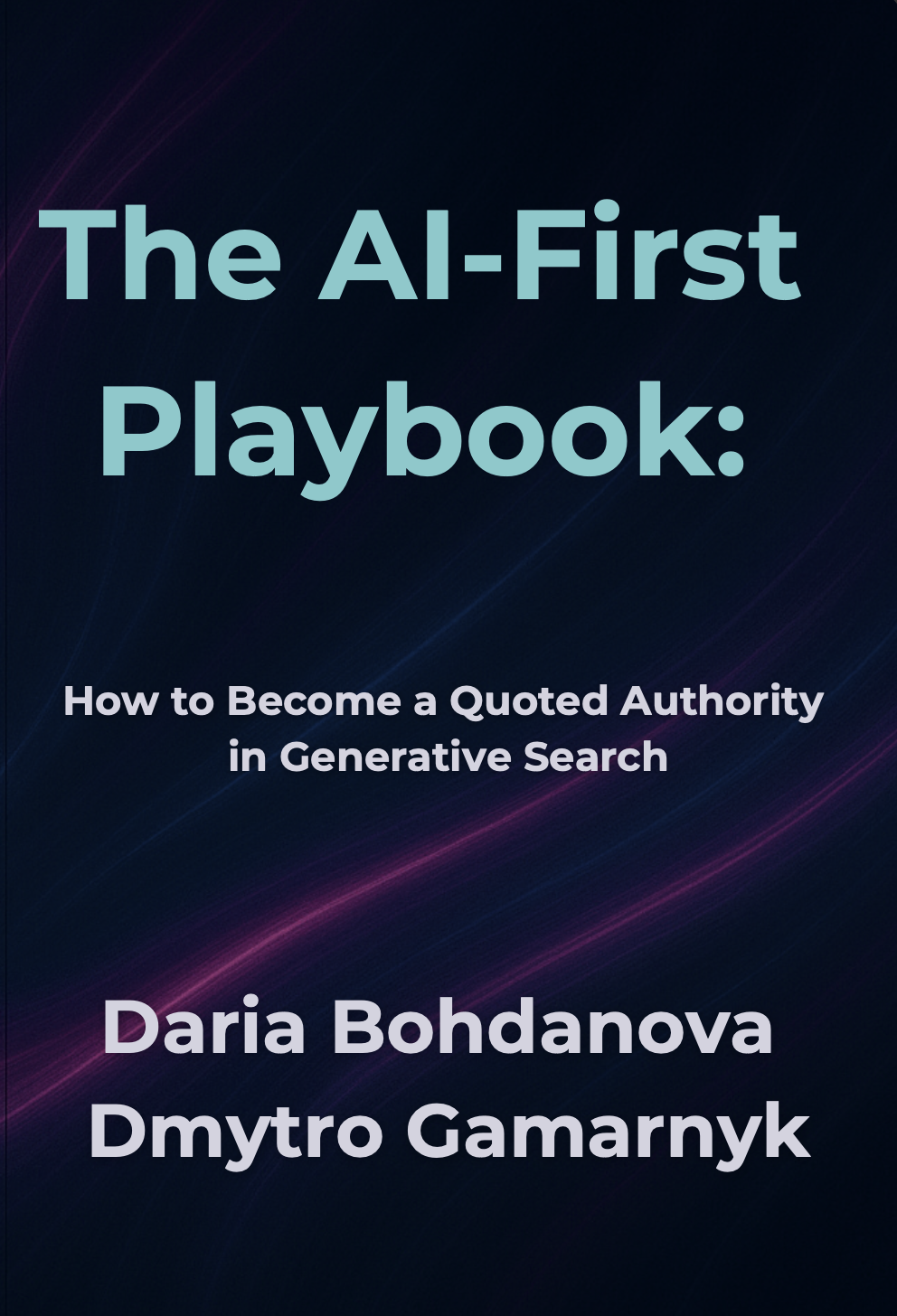
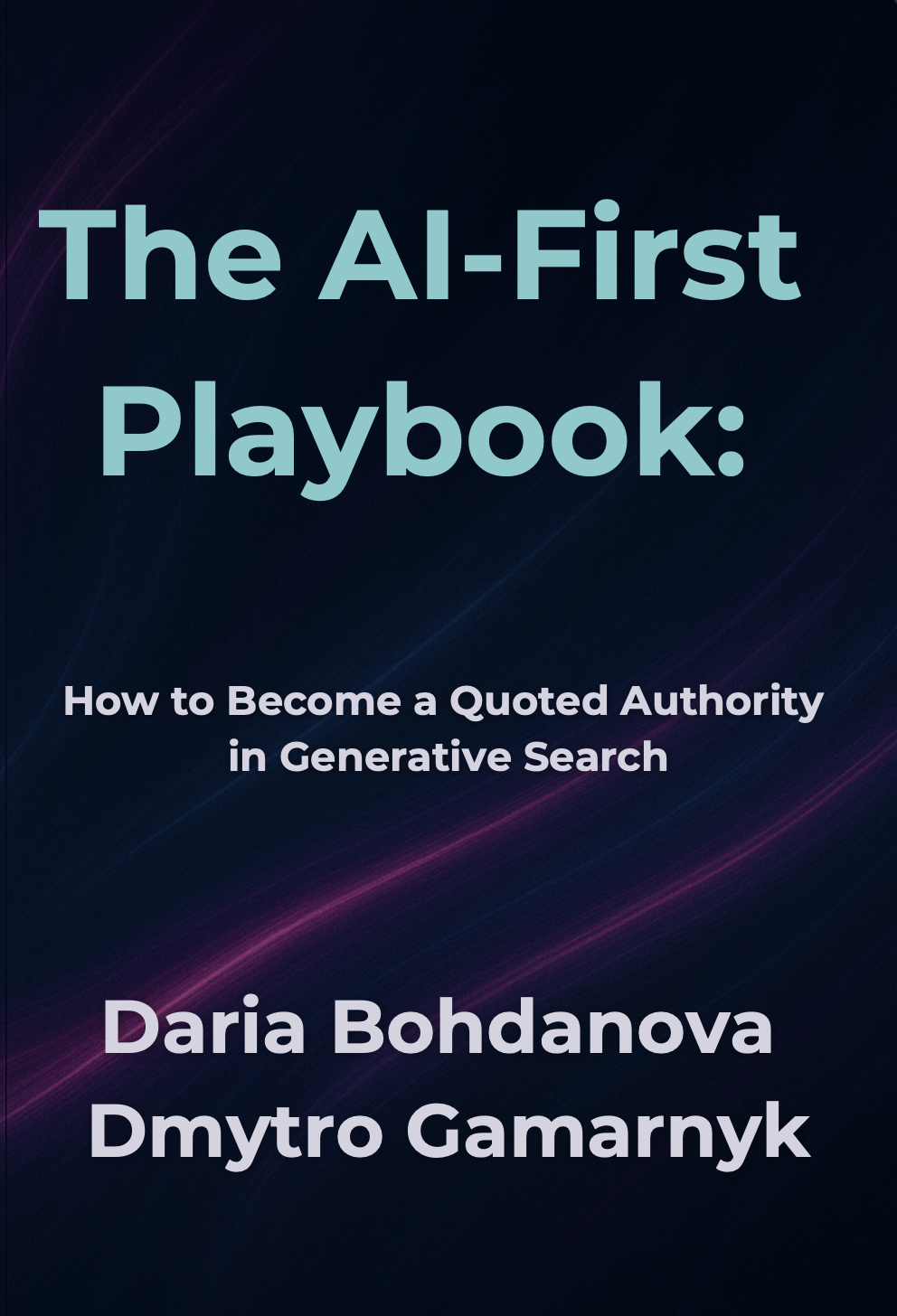
    The AI-First Playbook book cover by Daria Bohdanova and Dmytro Gamarnyk
    Books & Frameworks

    The AI-First Playbook

    A practical framework for building visibility, trust, and citation-readiness in generative search.

    Explore the book and its AI-first framework →

    Continue Through the ScriptWise Knowledge Hub

    Frequently Asked Questions

    Does ChatGPT use one fixed ranking system for recommendations?

    No public documentation describes one universal recommendation score. The result depends on the query, available tools, retrieved sources, model reasoning, and the context of the conversation.

    What is the most important factor for appearing in ChatGPT recommendations?

    There is no single factor. Strong candidates combine semantic relevance, clear entity information, retrievable answers, current evidence, authority signals, and trustworthiness.

    Do knowledge graphs directly control ChatGPT recommendations?

    Not as a simple public ranking switch. Knowledge-graph thinking is useful because it clarifies entities and relationships, making content easier to interpret, retrieve, and connect.

    Does freshness always beat authority?

    No. The balance depends on the question. Current product information needs freshness; stable concepts may depend more on authority, clarity, and evidence.

    Can a small brand be recommended over a large company?

    Yes. A smaller source can be a stronger match when it gives a more precise, current, well-supported answer for the user’s specific context.
    Selected Sources

  • The Future of Content Is Here: How to Optimize for Google and AI in 2026

    AI Search & Product Writing

    The future of content is not a choice between writing for Google, writing for AI, or writing for people. The real advantage comes from designing one coherent information experience for all three.

    By July 2026, content discovery is increasingly conversational, citation-driven, and shaped by systems that synthesize answers before users ever reach a page. That makes product thinking — clarity, structure, context, and trust — central to modern content strategy.

    By Daria BohdanovaProduct Writing · AI Search · Knowledge ArchitectureUpdated July 2026Reading time: 12–14 minutes

    The Core Idea

    Search visibility is no longer only about where a page ranks. It is also about whether a search engine or AI system can understand the page, connect it to a credible source, extract a useful answer, and send the right user deeper into the experience.

    The Search Journey Has Changed

    For years, content strategy followed a predictable sequence: choose a keyword, publish a page, win a ranking, earn a click.

    That sequence still exists, but it is no longer the whole journey. Google now includes AI Overviews and AI Mode. ChatGPT search returns current answers with links to web sources. Claude can search the web and provide cited responses. Search is becoming an interface that interprets, compares, and synthesizes before the user decides what to open.

    Google’s current guidance is surprisingly grounded: the same technical foundations still matter, and there is no special secret markup required to appear in its AI features. The deeper shift is strategic. A page must be crawlable and useful, but it must also be clear enough to function as source material.

    01QuestionA user expresses a need in natural language.
    02InterpretationSearch and AI systems identify context and intent.
    03SynthesisRelevant sources are compared and summarized.
    04SelectionThe user chooses which source deserves attention.
    05ExperienceThe page must deliver on the promise that earned the click.
    Ranking helps a page become available. Product-quality content helps it become understandable, selectable, and useful.

    Why This Is a Product-Writing Problem

    I approach AI-search content through the same lens I use for product writing: every page is an interface between a user’s uncertainty and a useful next step.

    A strong article does more than contain information. It helps the reader understand where they are, what matters, what evidence supports the claim, and what to do next. That is product behavior expressed through language.

    01

    Orientation

    The user immediately understands the topic, scope, and value of the page.

    02

    Information hierarchy

    Definitions, comparisons, evidence, and actions appear in a logical order.

    03

    Decision support

    The content reduces uncertainty rather than adding more words to the problem.

    04

    Continuity

    Internal links, related ideas, and calls to action create a coherent next step.

    This is why the future of content belongs as much to product writers and information architects as it does to traditional SEO specialists.

    A Small Moment That Changed How I Think About Content

    The page was technically correct — and still failed.

    I have worked with content that contained the right keywords, accurate product details, and all the expected SEO elements. Yet the page still felt difficult to trust because the information was arranged around what the business wanted to say, not around what the user needed to understand.

    That distinction changed my approach. I stopped treating optimization as a final polish and started treating content as a designed experience. Before writing, I now look for the decision path: what the user already knows, what remains unclear, what evidence matters, and which sentence should remove the next point of friction.

    The result is content that works more naturally for people and is also easier for machines to interpret because the logic is explicit rather than implied.

    What AI-Optimized Content Means in 2026

    AI-optimized content is not content written to manipulate a language model. It is content designed to remain useful across traditional search, generative answers, voice interfaces, research tools, and direct human reading.

    • Clear semantic scope: one central topic with connected concepts explained without drift.
    • Direct answers: definitions and conclusions are stated clearly enough to stand alone.
    • Visible expertise: authorship, experience, methodology, and source quality are easy to identify.
    • Structured depth: headings, tables, examples, FAQs, and internal links reveal the logic.
    • Original value: the article contributes judgment, synthesis, a framework, or first-hand insight.
    • Human usefulness: the content helps someone understand, compare, decide, or act.

    Google explicitly recommends helpful, reliable, people-first content and warns that using generative tools to create large volumes of low-value pages may violate its scaled-content policies. AI can support research and structure, but value still has to come from the publisher.

    Traditional SEO vs. AI-First Content Design

    Traditional emphasisAI-first product-content emphasis
    Targeting a keywordResolving a complete information need
    Winning a positionBecoming a useful and credible source
    Optimizing a page in isolationBuilding a connected knowledge system
    Driving any clickAttracting the right user with the right expectation
    Publishing more contentPublishing differentiated expertise
    Measuring rankings aloneMeasuring visibility, citation, qualified traffic, and outcomes

    The two approaches are not enemies. Strong technical SEO remains the delivery infrastructure. AI-first content design improves the quality and interpretability of what that infrastructure delivers.

    The ScriptWise Product-to-Answer Framework

    This is the framework I use to connect product writing, semantic SEO, and AI visibility.

    01

    Discover the real decision

    Go beyond the surface query. Identify what the user is trying to understand, compare, avoid, or accomplish.

    02

    Define the information architecture

    Arrange the page around the user’s learning sequence: context, definition, evidence, alternatives, action.

    03

    Clarify entities and terminology

    Use stable names, precise definitions, and consistent relationships between products, people, concepts, and organizations.

    04

    Add human authority

    Include original experience, examples, methodology, expert review, and honest interpretation.

    05

    Design extractable answers

    Use concise explanations, comparison tables, process steps, and FAQs that remain accurate when summarized.

    06

    Connect the knowledge system

    Link the page to related articles, frameworks, author expertise, product documentation, and next-step resources.

    07

    Measure the quality of discovery

    Track rankings, qualified visits, assisted conversions, branded search, source mentions, and the accuracy of AI-generated descriptions.

    What I Actually Do Before I Write

    When I work on a page, I rarely begin with the opening sentence. I begin with the system around it.

    • I map the user’s intent and the decision the content must support.
    • I identify the product logic that cannot be distorted or oversimplified.
    • I separate primary claims from supporting context.
    • I define terminology and entity relationships.
    • I decide where evidence, examples, and objections belong.
    • I design the page so that each section earns the next one.

    Only then do I write. This is the difference between producing copy and designing content behavior.

    Humanize the Content — Without Making It Vague

    Humanized content is often misunderstood as casual tone, personal anecdotes, or conversational wording. Those can help, but genuine human value comes from judgment.

    A machine can produce a polished overview. A specialist can explain which distinction matters, where the common advice fails, what the reader is likely to misunderstand, and how the recommendation changes in a real product context.

    H

    Human signal

    Specific experience, informed opinion, empathy, context, and responsibility for the final claim.

    M

    Machine readability

    Clear structure, explicit relationships, stable terminology, evidence, and concise summaries.

    The strongest content does both. It feels authored, but it does not make the reader work to understand the author.

    Can AI Write the Article?

    AI can accelerate research, help organize source material, identify missing questions, compare drafts, and test whether an explanation is understandable. That makes it an excellent part of a professional workflow.

    But speed is not the same as authority. Publishing raw generated text without expert review creates obvious risks: factual errors, flattened brand voice, invented certainty, weak differentiation, and content that says many correct-sounding things without making a meaningful decision.

    Google’s guidance does not prohibit AI-assisted content. It focuses on purpose and value. The key question is not “Was AI involved?” but “Did this page genuinely help the user?”

    What Search and AI Systems Need From Your Page

    No publisher can guarantee citation or inclusion in an AI-generated answer. But a page can make itself easier to discover, understand, and verify.

    • Allow crawling and indexing.
    • Use descriptive titles and headings that match the actual subject.
    • State important answers directly.
    • Show who wrote or reviewed the content and why their perspective is relevant.
    • Link claims to primary or authoritative sources.
    • Use structured data where it accurately represents visible page content.
    • Build internal links that reveal your broader area of expertise.
    • Keep the page experience fast, accessible, and usable on mobile.

    OpenAI describes ChatGPT search as providing timely answers with links to relevant web sources, while Anthropic’s web-search product similarly emphasizes current, cited responses. That makes source quality and interpretability part of the user experience, not merely an SEO concern.

    Read Also: The ScriptWise Knowledge Path

    Future-Proofing Content Means Building a System

    A single optimized article can perform well. A connected knowledge system can build authority.

    The strongest content ecosystems align product pages, documentation, expert articles, FAQs, case studies, author profiles, and brand language around a consistent field of expertise. Each page answers one question while reinforcing the meaning of the whole system.

    This is where product writing becomes a strategic advantage. It creates continuity between what the company promises, what the product does, what the documentation explains, and what search or AI systems say about it.

    The future of content is not more output. It is better-designed knowledge.

    Frequently Asked Questions

    What is AI-optimized content?

    AI-optimized content is useful, well-structured, credible content designed to be understood across search engines, generative systems, and direct human reading.

    Is GEO replacing SEO?

    No. Generative Engine Optimization and similar labels extend traditional SEO rather than replace it.

    Can ChatGPT or Claude cite my content?

    These systems can surface and link to web sources when search is used, but citation is never guaranteed. Clear structure, credible authorship, accessible pages, original value, and trustworthy sourcing improve the conditions for discovery and reuse.

    Does Google penalize all AI-generated content?

    No. Google focuses on whether content is helpful and created for people. Large-scale generation of low-value pages designed to manipulate rankings can violate spam policies.

    How long should an AI-optimized article be?

    There is no universal ideal length. It should be long enough to resolve the real question and short enough to avoid repetition.

    Why is product writing relevant to AI search?

    Product writing organizes information around user decisions. That same clarity makes content easier for both people and machines to interpret.

    Can AI replace product writers?

    AI can accelerate parts of the workflow, but product writing requires judgment about user needs, business logic, risk, terminology, interface behavior, and the consequences of a message.

    Sources and Further Reading

    1. Google Search Central: AI features and your website.
    2. Google Search Central: Optimizing for generative AI features.
    3. Google Search Central: Creating helpful, reliable, people-first content.
    4. Google Search Central: Guidance on using generative AI content.
    5. Google Search Central: Introduction to structured data.
    6. OpenAI: Introducing ChatGPT search.
    7. Anthropic: Claude web search with cited responses.
    About the author: Daria Bohdanova is a product and content strategist specializing in product writing, AI-search strategy, semantic content architecture, and trust-based communication. She designs content systems that help people understand complex products — and help search engines and AI platforms interpret that expertise accurately.
  • How to Become Quotable by AI Systems

    AI Search & Content · Citation Readiness

    AI systems do not quote the loudest sentence. They quote the sentence that can travel: clear enough to extract, specific enough to trust, and complete enough to survive outside its original page.

    A practical framework for designing ideas, claims, evidence, and content structures that generative systems can cite, summarise, and reuse without destroying the meaning.

    By Daria BohdanovaAI Search · Product Communication · Knowledge ArchitectureScriptWise Premium Flagship ArticleApprox. 1,750 words

    The core idea

    Quotability is not a writing trick. It is the result of making one unit of meaning self-contained, evidence-aware, attributable, and structurally easy to retrieve.

    Most content is readable. Far less content is quotable.

    A human reader can tolerate context.

    They can follow a long introduction, infer what a pronoun refers to, remember a point made three paragraphs earlier, and understand that a sentence depends on the table above it.

    An AI system working inside retrieval and synthesis has a different problem.

    It may encounter only a passage. It may compress that passage into one sentence. It may combine it with three other sources. It may place the result inside an answer your page never anticipated.

    That means a beautiful sentence can still be useless if it cannot stand alone.

    A quotable sentence carries its own subject, claim, context, and boundary.

    The test is not whether the sentence sounds impressive. The test is whether it remains accurate after extraction.

    The anatomy of an AI-quotable statement

    A quote that can survive retrieval SUBJECT What exactly is being discussed? CLAIM What is being asserted? BOUNDARY When and where is it true? EVIDENCE Why should it be trusted? ATTRIBUTION Who owns the statement? SELF-CONTAINED, EXTRACTABLE, VERIFIABLE

    The six qualities of quotable content

    01

    It names the subject

    Avoid “this,” “it,” and “the result” when the sentence may be retrieved alone.

    02

    It makes one claim

    One sentence should not carry five conclusions, three caveats, and a sales pitch.

    03

    It includes the boundary

    Specify audience, timeframe, conditions, or limitations when they change the meaning.

    04

    It exposes the evidence

    Numbers, methodology, examples, source links, and dates turn assertion into usable proof.

    05

    It has a clear owner

    Named authorship and visible expertise make attribution possible.

    06

    It survives compression

    The idea remains accurate when reduced to one or two sentences.

    From sentence to AI hook

    In The AI-First Playbook, we use the term AI hook for a compact piece of content designed to be easy for an AI system to understand and quote.

    “Write statements that are measurable, checkable, and phrased like the opening line of an insight report.”
    The AI-First Playbook, p. 159

    The important word is not “catchy.” It is checkable.

    An AI hook is not a slogan. It is a high-density knowledge unit.

    It may be a definition, a measured observation, a comparison, a causal explanation, or a carefully bounded recommendation.

    Weak statementQuotable version
    Structured content is better.Structured content improves retrieval because headings, tables, and modular answer blocks expose relationships that are otherwise buried in prose.
    AI search is changing SEO.AI search shifts the visibility goal from ranking a page to becoming a trusted source inside a synthesized answer.
    Freshness matters.Freshness matters most when the user’s decision depends on current prices, product features, regulations, roles, or market conditions.
    Trust is important.Trust increases when a claim is attributable, current, specific, and easy for the reader to verify at the source.

    Quotability is architecture, not decoration

    A single quotable line is useful. A system of quotable knowledge is far more powerful.

    The line should connect to the page, the page to a topic cluster, the topic cluster to an author or organization, and the claim to visible evidence.

    INSIGHTone clear idea ANSWER BLOCKcontext + evidence PAGEintent + structure AUTHORITYrepetition + trust

    This is why a good quote on an isolated page has limited power. Authority compounds when the same idea appears consistently across articles, documentation, interviews, case studies, social posts, and credible third-party references.

    “When your name repeatedly appears near specific topics, the system connects dots.”
    The AI-First Playbook, p. 159

    How to write a quote-ready answer block

    I use a five-part pattern:

    • Direct answer: state the conclusion first.
    • Reason: explain why it is true.
    • Boundary: show where the claim changes.
    • Evidence: add data, examples, sources, or method.
    • Implication: explain what the reader should understand or do next.
    A quote-ready answer block is complete enough to stand alone and connected enough to invite verification.

    What makes AI avoid a quote

    ProblemWhy it weakens quotability
    Vague pronounsThe extracted sentence loses its subject.
    Unsupported numbersThe claim sounds precise but cannot be verified.
    Marketing superlatives“Best,” “leading,” and “revolutionary” add confidence without evidence.
    Hidden caveatsThe quote becomes misleading outside the full paragraph.
    Conflicting terminologyThe system cannot reliably connect the claim to the correct entity.
    Outdated contextThe sentence may be clear but no longer useful.

    Structured trust: speaking to humans and machines at once

    Human readers respond to clarity, relevance, confidence, and emotional intelligence.

    Machine systems also need metadata, authorship, timestamps, source relationships, schema, and consistent internal structure.

    “Think of it as writing in two languages at once: one for humans, one for machines.”
    The AI-First Playbook, p. 160

    The human layer says: this idea is useful.

    The machine layer says: this idea has a stable identity, a responsible author, a current date, and a visible relationship to evidence.

    Both are necessary. A sentence without human value will not influence. A sentence without structural trust may not be selected.

    A practical quotability checklist

    • Can the sentence be understood without the paragraph above it?
    • Does it name the entity, process, or audience directly?
    • Does it make one main claim?
    • Are the date, condition, and scope visible where necessary?
    • Can a reader verify the claim from the page?
    • Is the author or organization clearly identified?
    • Does the site use the same terminology elsewhere?
    • Would a compressed version still preserve the meaning?

    The strategic goal is not to manufacture quotes

    The goal is to make expertise portable.

    Your strongest ideas should be able to move from a long article into a generated answer, a comparison table, a podcast summary, a LinkedIn post, or a documentation snippet without losing ownership or precision.

    This connects directly to How ChatGPT Chooses What to Recommend. Recommendation begins with retrieval, but quotability determines whether the retrieved material can be reused cleanly.

    It also connects to Why AI Search Needs Structured Thinking, Not More Content. Quotable content is the visible result of structured thought.

    Do not ask only, “Can AI find this page?” Ask, “What exact idea from this page deserves to travel?”
    The AI-First Playbook book cover by Daria Bohdanova and Dmytro Gamarnyk
    Books & Frameworks

    The AI-First Playbook

    A practical guide to building AI-visible, citation-ready content systems that combine structure, psychology, authority, and trust.

    Explore the book and its framework →

    Continue Through the ScriptWise Knowledge Hub

    Frequently Asked Questions

    What makes content quotable by AI systems?

    Quotable content is self-contained, specific, attributable, current, evidence-aware, and easy to understand outside its original paragraph.

    Is a short sentence always more quotable?

    No. Brevity helps only when the sentence still contains enough context to remain accurate.

    Do AI systems prefer statistics?

    Statistics can increase specificity, but unsupported or outdated numbers weaken trust. A clear definition or bounded explanation can be equally quotable.

    What is an AI hook?

    An AI hook is a compact, high-density unit of meaning designed to be easily understood, verified, and reused inside a generative answer.

    Can personal opinion be quotable?

    Yes, when it is clearly attributed, framed as interpretation, and supported by visible reasoning or experience.

  • Why AI Search Needs Structured Thinking, Not More Content

    AI Search & Content · Knowledge Architecture

    AI search does not reward the website that publishes the most. It rewards the source that makes meaning easiest to retrieve, verify, and reuse.

    The future of visibility is not a content-volume race. It is an information-design problem.

    By Daria BohdanovaAI Search · Product Writing · Knowledge ArchitectureScriptWise Premium Cornerstone ArticleApprox. 1,750 words

    The core idea

    More content creates more surface area. Structured thinking creates retrievable meaning. AI systems need the second far more than the first.

    The content problem is often a thinking problem

    I keep seeing the same recommendation: publish more.

    More articles. More landing pages. More FAQs. More posts. More content clusters.

    Sometimes that is the right answer.

    But often, the company already has enough material. What it lacks is a visible system of thought.

    The website contains definitions that contradict one another. Product terminology changes from page to page. Questions are answered indirectly. Important claims are buried inside introductions. Comparison logic is implied but never stated.

    Then the team adds another twenty articles to the same information disorder.

    The result is not authority. It is a larger archive of uncertainty.

    AI search cannot retrieve a structure that the organization has never created.

    More content and better structure produce different outcomes

    Volume-first strategy

    More pages
    More repetition
    More overlap
    More ambiguity
    Lower retrieval confidence

    Structure-first strategy

    Clear entities
    Defined relationships
    Modular answers
    Consistent language
    Higher retrieval confidence

    What structured thinking means in AI search

    Structured thinking is not merely formatting. Headings, tables, and FAQ blocks help, but they cannot compensate for weak reasoning.

    Real structure begins before the page is written.

    01

    Define the object

    What exactly is being described: a product, process, method, category, service, or decision?

    02

    Define the relationship

    How does this object relate to alternatives, users, stages, risks, and outcomes?

    03

    Define the answer unit

    What part of the content could stand alone as a reliable response to one precise question?

    04

    Define the evidence

    Which claims need proof, qualification, examples, dates, authorship, or direct source support?

    From page production to answer architecture

    Traditional content planning often starts with a list of titles. AI-first planning should start with a map of decisions.

    What does the audience need to understand? What will they compare? What objections will appear? Which terms must remain stable? Which answer depends on context?

    User question
    Intent
    Entity and context
    Answer block
    Evidence and next step

    This sequence matters because generative search rarely treats a page as one indivisible object. It retrieves, compresses, combines, and reframes information.

    If a useful answer is hidden inside 1,800 words of throat-clearing, the page may be valuable to a patient reader and still be difficult to reuse. If each section answers one recognisable question, the content becomes modular without becoming simplistic.

    A note from The AI-First Playbook

    The AI-First Playbook book cover by Daria Bohdanova and Dmytro Gamarnyk
    Book reference

    The AI-First Playbook: How to Become a Quoted Authority in Generative Search

    By Daria Bohdanova and Dmytro Gamarnyk. The book develops the idea that visibility in generative search depends on clarity, intent, trust signals, and modular content design.

    Explore the book and its framework →

    “AIO SEO is not a plugin or a tool. It’s a mindset.”
    The AI-First Playbook, p. 15

    That line matters because many teams still approach AI search as a new optimization layer placed on top of old content operations.

    They add schema, expand FAQs, run pages through another tool, and assume the problem has been solved.

    But AI visibility is not created by one plugin or one checklist. It is created by an editorial system that makes knowledge coherent before it makes it searchable.

    “Write like an architect, not a bricklayer.”
    The AI-First Playbook, p. 54

    The five structures AI-ready content needs

    StructureWhat it doesWhat happens without it
    Entity structureClarifies who or what the page is aboutNames, products, and categories blur together
    Intent structureMatches the answer to the user’s actual decisionThe page is relevant in topic but useless in context
    Semantic structureConnects terms, concepts, alternatives, and consequencesAI sees isolated phrases rather than a coherent model
    Evidence structureSeparates claims, examples, qualifications, and sourcesConfident language appears unsupported
    Navigation structureConnects the page to the wider knowledge systemStrong pages remain isolated and authority does not compound

    Why content volume can reduce authority

    Publishing more is not neutral.

    Every new page can introduce another definition, another date, another naming convention, another unsupported claim, or another partial answer.

    At small scale, this looks like inconsistency. At large scale, it becomes knowledge debt.

    Knowledge debt is the distance between what an organization knows and what its content system can explain consistently.

    • Multiple pages compete for the same question.
    • Old articles remain live after the product changes.
    • Writers create new terminology for existing concepts.
    • FAQs answer the same objection differently across the site.
    • AI-generated drafts multiply wording without strengthening the model underneath.
    A larger content library does not automatically create a stronger knowledge base.

    What AI can retrieve is shaped by what humans can maintain

    This is where documentation strategy becomes central to AI search.

    A well-maintained glossary, consistent product taxonomy, versioned documentation, clear ownership, and intentional internal linking create the conditions for reliable retrieval.

    This is also the argument behind Product Documentation for Humans and AI: documentation is no longer written for one reader. It must help people complete tasks, help teams maintain knowledge, and help AI systems retrieve the correct answer without distorting the product.

    AI search does not remove the need for documentation discipline. It exposes the cost of not having it.

    A practical structure-first workflow

    01

    Audit questions, not pages

    Collect the questions users, sales teams, support teams, and search systems repeatedly ask.

    02

    Map the answer ownership

    Choose one primary page or module for each major question.

    03

    Normalize terminology

    Decide which terms are official, which are synonyms, and where context changes meaning.

    04

    Design modular evidence

    Use definitions, examples, tables, comparisons, FAQs, and source notes as reusable answer units.

    05

    Link by reasoning

    Internal links should continue the user’s decision, not merely connect similar keywords.

    06

    Refresh the system

    Update connected pages together when the product, evidence, or terminology changes.

    Structure does not mean writing like a machine

    One of the worst reactions to AI search is to make every page sound like a database.

    Human readers still need rhythm, relevance, emotional calibration, and a reason to care.

    The answer is not to remove narrative. It is to give narrative architecture.

    A story can still have a clear problem, context, decision, and outcome. An essay can still contain quotable definitions. A deeply human page can still use stable terminology and visible evidence.

    As explored in The Psychology Behind Good Product Copy, clarity reduces cognitive load and increases perceived control. The same structural choices that help AI interpret a page also help people trust it.

    The real competitive advantage

    The advantage is not publishing faster than everyone else.

    AI has already made that advantage temporary. Every competitor can now generate more drafts, more variations, more outlines, and more pages.

    The lasting advantage is having a clearer model of the subject than everyone else.

    That model becomes visible through terminology, hierarchy, comparison, evidence, and internal connection.

    It becomes the reason your content can be quoted without being misunderstood.

    AI search rewards content that can survive compression.

    When a long page is reduced to three sentences, does the central idea remain accurate? When a comparison is summarised, does the distinction survive? When a definition is retrieved alone, does it still make sense?

    Structured thinking is what makes the answer yes.

    Continue Through the ScriptWise Knowledge Hub

    Frequently Asked Questions

    What does structured thinking mean in AI search?

    It means organizing knowledge around clear entities, relationships, questions, answer units, evidence, and user decisions before turning that knowledge into pages.

    Does publishing more content improve AI visibility?

    Only when the new content adds distinct, accurate, and well-connected knowledge. Repetition and overlap can make a site harder to interpret and maintain.

    What makes content easier for AI to retrieve?

    Clear headings, direct answers, stable terminology, comparison tables, FAQs, authorship, evidence, current information, and strong internal connections all improve retrievability.

    Is structured content the same as formulaic content?

    No. Structure organizes meaning. Formulaic writing repeats surface patterns. Strong content can be personal, narrative, and original while still having a clear information architecture.

    What should a company fix before producing more content?

    It should audit terminology, duplicated topics, outdated pages, unanswered user questions, internal linking, evidence quality, and ownership of core answers.

    About the author: Daria Bohdanova is a senior technical and product writer working at the intersection of AI search, product communication, documentation strategy, behavioral psychology, and knowledge architecture. She helps teams build content systems that remain clear enough for people to trust and structured enough for AI to retrieve.
  • The AI-First Playbook: Building Trust and Visibility in the Era of Generative Search

    AI Search & Content

    In 2025, visibility is no longer measured only by keyword rankings. It is increasingly measured by whether people and AI systems can understand, trust, and reuse your expertise.

    The transition from traditional SEO to AI-optimized content is not a cosmetic update. It is a strategic change in how brands earn attention, authority, and recommendation.

    By Daria BohdanovaWith research perspective co-developed with Dr. Dmytro GamarnykReading time: 10–12 minutes

    Executive Summary

    Search engines once acted mainly as indexes. Generative systems increasingly act as interpreters: they compare sources, synthesize answers, and present selected links or citations inside a direct response. This changes the objective of content strategy. Ranking still matters, but ranking alone is no longer enough. Content must also be structurally clear, semantically complete, credibly authored, and useful enough to be selected as evidence.

    Key Takeaways

    • Traditional SEO remains essential, but it is now the foundation rather than the entire strategy.
    • AI systems favor content that is easy to interpret, verify, summarize, and connect to a credible source.
    • Clear authorship, original expertise, first-hand insight, and trustworthy references are becoming strategic visibility assets.
    • Brands need content ecosystems, not isolated keyword pages.
    • The strongest long-term advantage is not publishing more. It is becoming the clearest and most credible source in a defined area of expertise.

    The New Discovery Layer

    For more than two decades, digital visibility was built around a familiar model: a user typed a query, a search engine returned ranked links, and websites competed for the click.

    That experience is changing. Google AI Overviews, ChatGPT search, Gemini, Copilot, Perplexity, and other generative interfaces increasingly produce a direct answer before a user visits any individual page. The system may still offer links, but the first interaction is now a synthesized explanation rather than a list of options.

    58%Approximately six in ten Google users in Pew’s March 2025 browsing analysis encountered at least one AI-generated summary.
    13.14%Share of U.S. desktop queries that triggered Google AI Overviews in Semrush’s March 2025 dataset.
    8% vs. 15%Traditional-result click rate when an AI summary appeared versus when it did not, according to Pew’s analysis.

    These figures reveal the strategic issue. Your content is not competing only for a position in a list. It is competing to become part of the answer itself.

    The question is no longer only, “Can this page rank?” It is also, “Can an AI system confidently understand, extract, and recommend what this page knows?”

    From Keywords to Conversations

    Traditional SEO often begins with a keyword. AI-first content begins with the complete information need behind a question.

    A person may search for “AI SEO strategy,” but their real intent is broader: they may want a definition, a comparison with traditional SEO, a practical framework, evidence that the approach works, and guidance on what to change first.

    Generative systems are designed to interpret this wider context. They evaluate whether a source answers the question clearly, whether the surrounding explanation is coherent, and whether important claims can be supported.

    Traditional SEO focusAI-optimized content focus
    Ranking for a keywordBecoming a trusted source for a topic and its connected questions
    Driving a click from a results pageEarning inclusion, citation, recommendation, and brand recall
    Optimizing individual pagesBuilding a connected knowledge ecosystem
    Matching search termsResolving user intent with context, clarity, and evidence
    Publishing at scalePublishing with distinctive expertise and verifiable value

    What AI-Optimized Content Actually Means

    AI optimization is sometimes described as a collection of new tricks: shorter paragraphs, question-based headings, schema markup, or repeated brand mentions. These elements can help, but they are not the strategy.

    AI-optimized content is content designed so that both people and machines can accurately understand its meaning, assess its credibility, and reuse its insights without losing context.

    That requires four qualities.

    01

    Semantic clarity

    The structure makes relationships between ideas obvious. Definitions are precise, headings reflect real questions, and each section has a clear purpose.

    02

    Credible authorship

    The reader can identify who created the content, why that person is qualified, and which experiences or sources support the claims.

    03

    Extractable value

    Important ideas can be accurately summarized. The page contains direct answers, frameworks, comparisons, and evidence rather than vague promotional language.

    04

    Topical consistency

    The article belongs to a larger body of related expertise across the website, author profile, services, books, and supporting publications.

    Why Traditional SEO Alone Is No Longer Enough

    Traditional SEO is not disappearing. Crawlability, indexing, page experience, internal linking, useful titles, and strong content remain essential. Google’s own guidance for AI features makes clear that the same fundamental search requirements still apply.

    The limitation is strategic: technical compliance can make a page discoverable, but it does not automatically make the page worth selecting.

    A page may rank because it matches a query. A source is more likely to be cited or summarized when it offers a clear answer, credible support, meaningful context, and a strong connection to a recognized area of expertise.

    This is why mass-produced content is increasingly fragile. It may contain the expected words, but it often lacks original judgment, lived experience, a defensible perspective, and the depth required to distinguish one source from hundreds of similar pages.

    The ScriptWise AI Visibility Framework

    The strategic response is not to abandon SEO. It is to extend it. The following framework combines human trust, search discoverability, and AI interpretability.

    Define the knowledge territory

    Choose the specific field in which the brand wants to be understood and recommended. Avoid trying to appear authoritative on every adjacent topic.

    Map real audience questions

    Build content around decisions, doubts, comparisons, risks, and desired outcomes — not only around high-volume keywords.

    Create a connected content ecosystem

    Use pillar articles, supporting guides, topic pages, books, services, case studies, and author pages to reinforce the same expertise from different angles.

    Make expertise visible

    Name authors, show relevant credentials, include original frameworks, explain methodology, and separate evidence from interpretation.

    Design for extraction without oversimplifying

    Use concise definitions, structured sections, comparison tables, clear conclusions, and direct answers that remain accurate outside the surrounding paragraph.

    Strengthen external trust signals

    Support important claims with credible references and build consistent brand representation across authoritative external sources.

    Measure visibility beyond rankings

    Track branded search growth, qualified traffic, citations, referral sources, assisted conversions, brand mentions, and whether AI systems describe the brand accurately.

    From Attraction by Trust to Algorithmic Credibility

    In Attraction by Trust, Daria Bohdanova and Dr. Dmytro Gamarnyk explored how credibility, empathy, emotional safety, and consistency influence human decisions.

    The AI-First Playbook extends that logic into the generative-search environment. Algorithms do not experience trust as humans do, but they evaluate many of its visible signals: consistent claims, identifiable authorship, clear structure, corroborating sources, transparent expertise, and coherent topical relationships.

    The bridge between human trust and algorithmic credibility is therefore not artificial. It is built through the same disciplined communication principles — made explicit enough for machines to interpret.

    A Practical AI-Ready Content Checklist

    Before publishing, ask whether the page can pass the following test:

    • Does the introduction clearly state what the reader will learn?
    • Is the main topic defined in direct, unambiguous language?
    • Do headings reflect meaningful questions and decisions?
    • Are factual claims linked to trustworthy sources?
    • Is the author clearly identified and relevant expertise visible?
    • Does the article add original judgment, a framework, or first-hand insight?
    • Can key sections be summarized accurately without losing context?
    • Does the page link to related content that deepens the topic?
    • Is the brand’s terminology consistent across the website?
    • Does the article help the reader act, not merely understand?

    Building the Future of Visibility

    The organizations that benefit most from generative search will not necessarily be those publishing the highest volume of content. They will be the organizations that make their expertise easiest to recognize.

    That means replacing fragmented campaigns with a durable knowledge system. Each article should strengthen a topic. Each topic should reinforce an area of authority. Each area of authority should connect naturally to the organization’s services, products, research, books, and people.

    Visibility then becomes more than traffic. It becomes the cumulative effect of being understood correctly across search engines, AI assistants, professional networks, and human recommendations.

    The future of visibility belongs to brands that teach both people and machines how to understand their value.
    Cover of The AI-First Playbook by Daria Bohdanova and Dmytro Gamarnyk
    Featured Book

    The AI-First Playbook

    Building Trust and Visibility in the Era of Generative Search

    A strategic guide to creating content ecosystems that are humanly relevant, semantically clear, and easier for AI systems to understand and recommend.

    Written by Daria Bohdanova and Dr. Dmytro Gamarnyk.

    Read The AI-First Playbook on Amazon

    Frequently Asked Questions

    What is AI-optimized content?

    AI-optimized content is structured so that people and generative systems can understand its meaning, assess its credibility, and accurately reuse its insights. It combines strong SEO foundations with semantic clarity, identifiable authorship, evidence, and topical depth.

    Is AI optimization replacing traditional SEO?

    No. Traditional SEO remains necessary for crawling, indexing, relevance, performance, and discoverability. AI optimization extends that foundation by improving how content is interpreted, synthesized, cited, and connected to a broader body of expertise.

    What is the difference between AIO, GEO, and LLMO?

    The terms overlap. AIO often refers to AI optimization broadly, GEO to generative engine optimization, and LLMO to optimization for large language models. In practice, all three focus on improving the likelihood that AI systems understand, mention, cite, or recommend a source.

    What helps content appear in AI-generated answers?

    There is no guaranteed formula. Strong foundations include crawlable pages, clear answers, descriptive headings, credible references, original expertise, consistent entity information, relevant internal links, and content that genuinely resolves a user’s question.

    How should brands measure AI visibility?

    Brands should look beyond rankings and monitor qualified referral traffic, assisted conversions, branded search, share of voice, AI citations or mentions, recurring source domains, and whether generative systems describe the organization accurately.

    Sources and Further Reading

    1. Pew Research Center: Google users are less likely to click on links when an AI summary appears in the results.
    2. Semrush: AI Overviews study and 2025 search analysis.
    3. Google Search Central: AI features and your website.
    4. Google Search Central: Guidance on using generative AI content.
    5. OpenAI: Introducing ChatGPT search.
    About the author: Daria Bohdanova is a marketing strategist, author, and founder of ScriptWise. Her work connects behavioral psychology, trust-based communication, content architecture, and AI visibility.